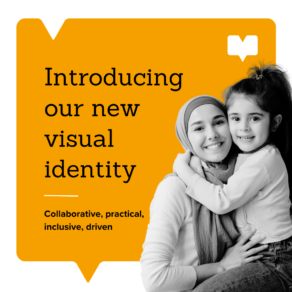
A new, values-driven visual identity
We are delighted to launch our new visual identity today. As the UK’s national charity for working parents and carers, it’s vital that our brand helps to drive our mission and reflects the people and employers we work with every day. We have developed our new look and feel to support our objectives of empowering working parents and carers, supporting employers, and driving meaningful policy change.
Mental Health Awareness Week
Mental health is something we should all care about, all year long. But Mental Health Awareness Week provides a great opportunity for us to share some of the progressive practices that some of our previous Best Practice Award winners have put in place to support employees.

Do the new childcare proposals have what it takes to solve the childcare crisis?
We welcome the acknowledgement by the Government that families are struggling and the current system is failing parents and carers who find themselves unable to make work, work. But, as with all policy announcements, the devil is in the detail.
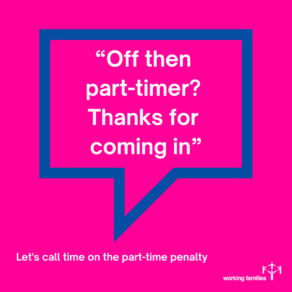
“She
onlyworks part-time” – Let’s call time on the part-time penaltyPart-time work is predominantly women’s work. It is undertaken by 38% of women, compared to 11% of men, very often so they can manage looking after their family. Working around caring commitments makes it the least flexible ‘flex’, and until the burden of care is shared more equally, women’s careers will continue to pay the price.

Q&A with Working Families Ambassador Elliott Rae
We recently sat down with our new ambassador Elliott Rae—founder of parenting platform MusicFootballFatherhood and one of the UK’s most prominent speakers on fatherhood—to talk about flexible working, mental health, and gender equality.

Q&A: How can flexible working support single parents?
We sat down with Julie Hawkins, a member of our Parents and Carers Panel and Founder of the Single Mums Business Network, to discuss how single parents can benefit from flexible working.
Supporting families in site-based sectors
For many people, flexible working has become the new normal. But not everyone has been able to enjoy the same access to flex. Almost half of working parents (46%) in the UK work in roles which require them to be at a specific location* which makes working remotely out of the question. If we’re to make flex fair for all, any conversation around flexible working must address the specific challenges of those parents and carers who work on-site, and start to find flexibility in every role.
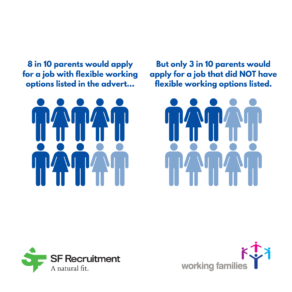
Why Flexible Recruitment Matters
This National Work Life Week we wanted a better understanding of the potential that advertising roles with options for flexible working has for opening up opportunities, for both parents and employers. Alongside our partners at SF Recruitment, we carried out a YouGov survey to ascertain what impact advertising flexibly would have on their choices and careers.
Working Families Index Panel Discussion: Making Flex More Accessible to All
How do we make sure the conversation around flexibility reaches everyone that needs it? It’s not always easy to say, ‘I need flexible working’, so how can employers help facilitate those discussions? As the webinar launch of the Working Families Index highlighted, the answer lies in communication and trust.

Pro Bono Week 2021 – Volunteering during the pandemic
For Pro Bono Week 2021, Esther Quarcoo, a volunteer at Working Families who joined in the summer of 2020, tells us why she chose to volunteer with the charity.
The pandemic smashed all of our worlds apart
I’d like to say I saw the flexible working revolution coming, because way back in 2014 I was already bringing it to employees at Dixons / Carphone as their Group HR director, but I don’t think anyone can really claim to have understood how much of an impact the pandemic would make on the world we work in now. I think it’s brought the process forward by at least ten years.
The big question that businesses aren’t answering
As we mark National Work Life Week this year, we’re witnessing a massive revolution in our world of work, accelerated by in part by new technology, the impact of the COVID-19 pandemic, legislative and regulatory changes, climate concerns and the pressing need to resolve social inequalities.
